
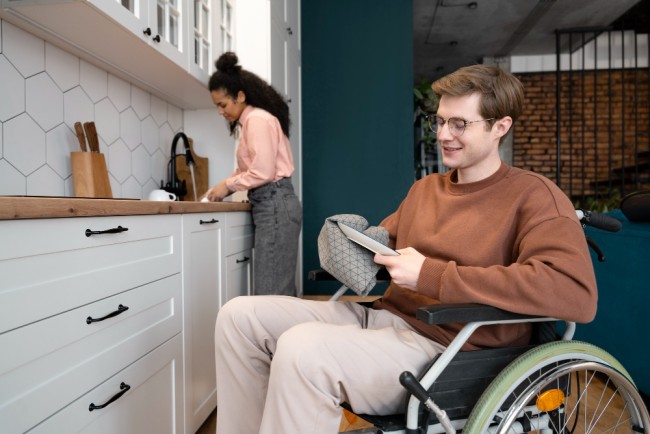
Inclusive design isn’t about planning specifically for one stage of life. Instead, it’s about creating spaces that work well at every stage.
A home that is easy to move through, safe to use, and comfortable for all ages is the ultimate goal. It makes it more practical and more welcoming. Not to be underestimated, but it also makes it more futureproof.
Are you renovating a family home? Updating a property with shared access? Either way, thoughtful design choices can make everyday living easier for everyone.
Think Beyond Mobility Alone
Mobility is always important when designing inclusive spaces. However, they also support more than just physical movement. They also consider:
- Vision
- Hearing
- Balance
- Comfort
Inclusions like wide walkways and clear sightlines, along with good lighting, can be highly beneficial for different people. This includes children, older adults, and anyone with temporary injuries that need to navigate a space safely.
Simple design decisions – think about contrasting colors between floors and walls, well-placed light switches, and uncluttered layouts – reduce confusion and accidents, all without making a home feel clinical.
Prioritize Flow and Ease of Movement
A home that flows well is naturally more inclusive. Open-plan layouts, wider doorways, level thresholds, and design elements like these allow people of different ages and abilities to move comfortably without constant adjustments.
Furniture placement plays a role here, too. Leaving enough space to maneuver around key areas such as dining tables and beds boosts usability. Additionally, it keeps every room of the property feeling calm and functional.
Make Key Rooms Work Harder
Kitchens and bathrooms benefit most from inclusive thinking. Why? Because these are high-use spaces where small design changes can have a large impact.
In the bathroom, walk-in showers and non-slip flooring improve safety levels without compromising style. The same is applicable for the likes of pull-out storage and lever taps in kitchens. Furthermore, adjustable-height features, where possible, allow spaces to adapt as needs change, ideal for households with multiple generations.
Managing Level Changes Thoughtfully
Steps and level changes can be one of the biggest challenges of any home. Ramps and reconfigured layouts are usually the first choice. However, they’re not always practical in properties with limited space.
With that in mind, in larger homes and residential buildings with shared access, commercial wheelchair lifts can sometimes be a discreet, effective solution. Built for regular use and higher weight capacity, they’re occasionally specified in residential settings where durability and long-term reliability are priorities. When integrated carefully, wheelchair lifts enhance access without dominating the space.
Create Spaces That Feel Welcoming (Not Clinical)
Aesthetics. It might sound superficial, but this is one of the biggest concerns regarding inclusive design. Fortunately, accessibility no longer means compromise. Thanks to modern materials and thoughtful finishes, it’s possible for inclusive spaces to still feel warm and personal.
Accessibility features can blend in naturally when complemented by other aspects of the home. Natural light is always a welcome sight, while soft textures and consistent design choices are beneficial. When inclusivity is considered early, it becomes part of the design – and not an afterthought.
Also Read: