

Abraham Maslow published his theory of human motivation in 1943. The world was mid-war. Psychology’s dominant frameworks were built around pathology — Freud’s unconscious drives, behaviourism’s stimulus-response loops, clinical models designed to explain what went wrong in people rather than what went right.
Maslow asked a different question. What does it actually take for a human being to function fully?
Eighty years on, that question hasn’t been answered so much as it’s been repeatedly rediscovered — often by people who never read the original paper.
The Pyramid Wasn’t His
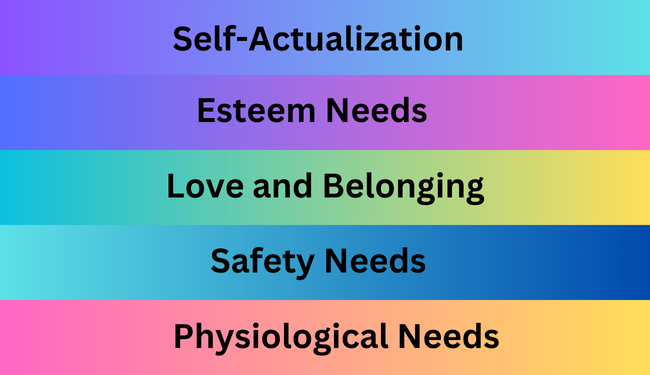
Most people first encounter Maslow’s hierarchy as a triangle in a business school slide deck. Five tiers, colour-coded, physiological needs at the base and self-actualisation floating at the top like an aspirational afterthought. Clean. Memorable. And in important ways, quietly wrong.
The pyramid never appeared in Maslow’s 1943 paper, A Theory of Human Motivation, published in Psychological Review. A later educator created the visual — useful shorthand that gradually hardened into doctrine.
What that graphic obscured was the actual argument: needs don’t activate in a tidy sequence. They overlap, compete, and regress. Safety can remain unstable while belonging is actively pursued. Esteem can collapse after self-actualisation has been reached. The model was dynamic. The pyramid made it look like a checklist.
That distinction isn’t academic. It determines whether the framework actually illuminates human behaviour or just describes it in a way that feels satisfying.
The Base Layers: Nowhere Near Solved
Physiological needs — food, water, shelter, sleep, warmth — sit at the foundation of the hierarchy. Safety encompasses health, financial security, protection from harm. Neither of these should still be live debates in 2025. Both are.
The World Food Programme reports that approximately 363 million people face acute hunger daily. The UN’s World Social Report documents expanding economic precarity across both developing and high-income nations — housing instability in major Western cities has reached levels not recorded since the immediate post-war period.
None of this is abstract to Maslow’s framework. The model’s central claim is that when foundational needs go unmet, higher-order motivations — belonging, meaning, growth — become systematically suppressed.
People experiencing food insecurity or housing precarity aren’t disengaged from purpose because they’ve made a motivational error. The hierarchy is functioning precisely as described. The suppression is the point.
Where organisations and policy frameworks go wrong is attempting to address meaning-layer problems — engagement, morale, self-development — while safety-layer conditions remain unresolved. The sequence cannot be skipped. Maslow’s framework doesn’t make that claim particularly loudly. The evidence behind it does.
Belonging Is Not a Culture Initiative
The third tier of the hierarchy — love, belonging, social connection — has attracted more empirical attention in the last decade than any other layer. The findings are difficult to dismiss.
The US Surgeon General’s Advisory on Loneliness and Isolation concluded that chronic social disconnection carries health consequences equivalent to smoking 15 cigarettes daily.
Around 50% of American adults report measurable loneliness. The United Kingdom created a dedicated ministerial role for loneliness in 2018 — still active — finds that over nine million people in Britain reported feeling lonely often or always. These are not fringe findings from boutique studies. They’re consistent signals across large populations.
Maslow placed belonging above safety in the hierarchy deliberately, based on observed behaviour rather than theoretical preference. What contemporary research confirms is that the absence of genuine social connection doesn’t register only as emotional pain — it degrades immune function, cardiovascular health, cognitive performance, and life expectancy through distinct physiological mechanisms. Belonging isn’t a soft need. It’s a hard one that operates through biology.
Remote and hybrid work have complicated this in ways that organisations are still processing poorly. Distributed teams can sustain professional connection while quietly eroding the ambient, low-stakes social contact — shared meals, corridor exchanges, unremarkable proximity — that feeds belonging at a level below conscious attention. Treating the resulting disengagement as a culture problem misidentifies it. It’s a belonging problem with a structural cause.
The Esteem Tier Nobody Reads Carefully
Maslow divided esteem into two distinct components: the need for respect from others, and the need for self-respect. They’re related but not interchangeable, and collapsing them produces a specific kind of confusion.
External validation without internal self-regard generates a brittle motivational structure. Status, recognition, and performance metrics satisfy the first component while leaving the second entirely unaddressed — sometimes actively destabilising it.
High-achieving professionals who are intolerant of critique, public figures who require continuous affirmation, teams that perform on paper while experiencing low morale — these patterns fit the esteem tier’s logic precisely. External esteem was supplied. Internal esteem wasn’t.
Modern performance management has, in many cases, systematically prioritised the wrong half. Public leaderboards, continuous feedback cycles, and metric-heavy appraisal systems are designed to address reputation and comparative standing.
They rarely address the question of whether an individual respects their own work, values their own judgement, or feels that their dignity is intact within the organisation.
Maslow’s framework suggests this is not a secondary concern — it’s a prerequisite for stable, sustained motivation. When it goes unmet, engagement hollows out even when productivity numbers hold.
Self-Actualisation Was Never About Career
“Becoming everything one is capable of becoming.” The phrase arrives from Maslow’s original paper and exits, in most corporate contexts, as a synonym for professional advancement. That reading misses almost everything Maslow meant.
Self-actualisation, in the original formulation, describes the alignment of behaviour with one’s deepest values — not achievement of external goals, but a quality of internal coherence that manifests across domains.
To understand who he was describing, Maslow studied people he believed had reached this level: Abraham Lincoln, Albert Einstein, Eleanor Roosevelt, Frederick Douglass, Harriet Tubman.
The common characteristics he identified — unflinching acceptance of reality, spontaneity, genuine concern for others, resistance to cultural pressure, and what he called “peak experiences” — had very little to do with professional output.
Peak experiences, specifically, were not pursued. They arrived as a consequence of living in alignment with one’s genuine values.
The distinction matters because productivity culture has inverted the sequence entirely — treating self-actualisation as a destination to optimise toward rather than a condition that emerges when the lower tiers are honestly resolved.
Maslow’s argument, read straight, is that the most reliable path to meaning runs through safety, belonging, and genuine self-respect. Not around them. Not in spite of them.
Where the Framework Has Real Limits
Criticism of Maslow’s hierarchy deserves honest engagement rather than footnote treatment.
The model was built primarily through observation of Western, educated individuals — a sampling constraint that shapes its assumptions about individualism and sequential need fulfilment.
Cross-cultural research, including Geert Hofstede’s extensive work on cultural dimensions, documents collectivist cultures where belonging is routinely prioritised above unresolved safety needs — without the motivational disruptions the hierarchy predicts.
Many communities demonstrate self-actualisation through service and collective purpose in conditions of material scarcity. The pyramid framing, with its implicit suggestion of upward progression through secured stages, doesn’t accommodate this well.
Clayton Alderfer’s ERG theory, developed as a direct response to these limitations, condensed the five tiers into three — Existence, Relatedness, Growth — and explicitly allowed for simultaneous need pursuit across levels. It’s a more flexible model. It attracted less cultural traction, partly because it’s harder to draw as a triangle.
Maslow himself extended the framework in later years, adding transcendence above self-actualisation — placing spiritual fulfilment and service to something beyond the self at the apex of human motivation. That addition is almost never included in the business-school version of the theory.
Why the Framework Hasn’t Aged Out
The hierarchy survives not because it’s a complete account of human motivation — it isn’t — but because it keeps asking a question that applied fields consistently underaddress: in what order do human needs operate, and what happens when that order is treated as optional?
Product designers use it to map user psychology at different stages of adoption. Public health researchers apply its logic to understand why certain interventions fail to reach the populations they target.
The World Health Organization’s social determinants of health framework operates on structurally similar assumptions without citing Maslow directly. HR functions deploy it to diagnose retention failures — usually after the fact.
The pyramid graphic got the model wrong in ways that mattered. The underlying argument — that human motivation follows a recognisable sequence, and that addressing higher-tier needs while leaving lower-tier conditions unstable produces predictable, specific failures — has not been surpassed. It’s been confirmed, repeatedly, by research conducted in disciplines that weren’t thinking about Maslow at all.
Eighty years is a long time for a framework to remain diagnostically useful. Most don’t make it a decade.
Also Read: